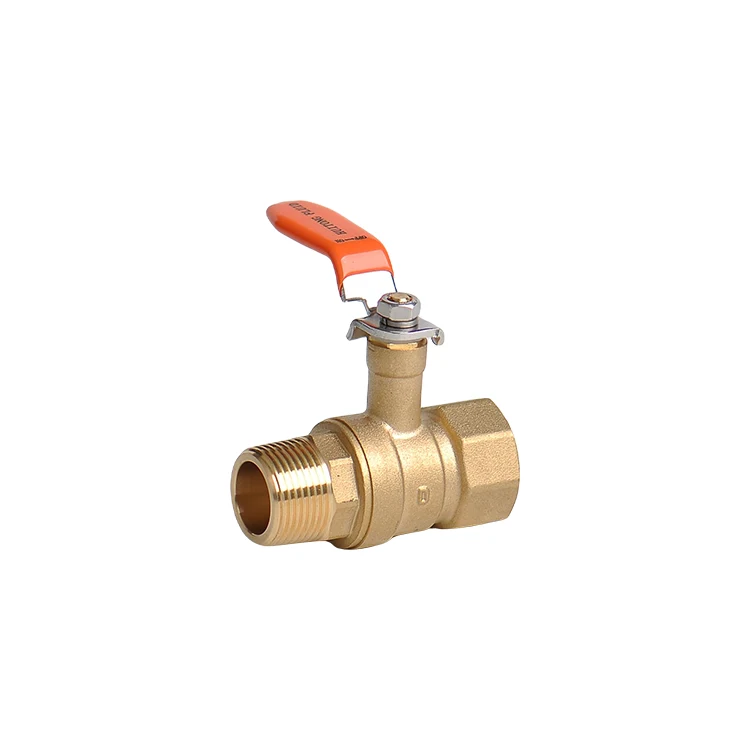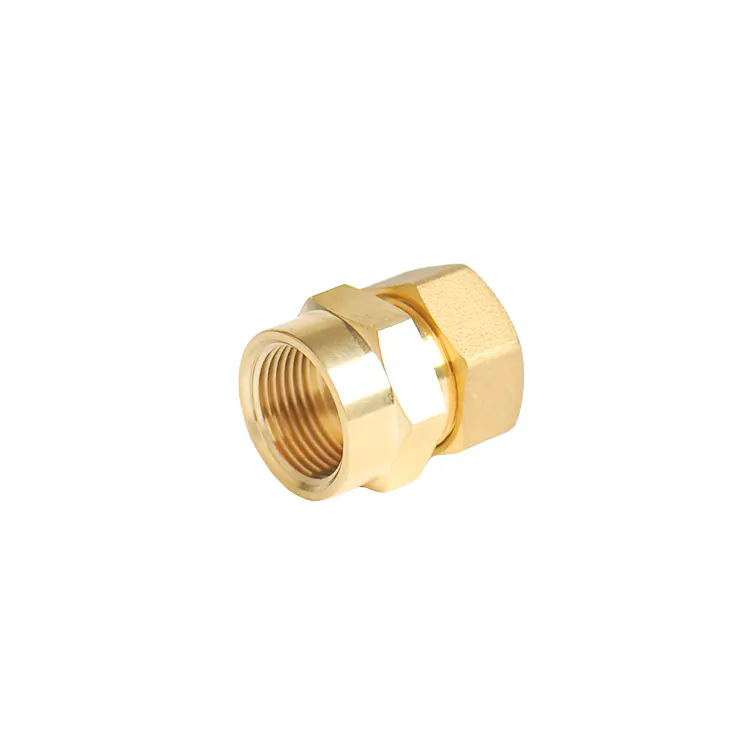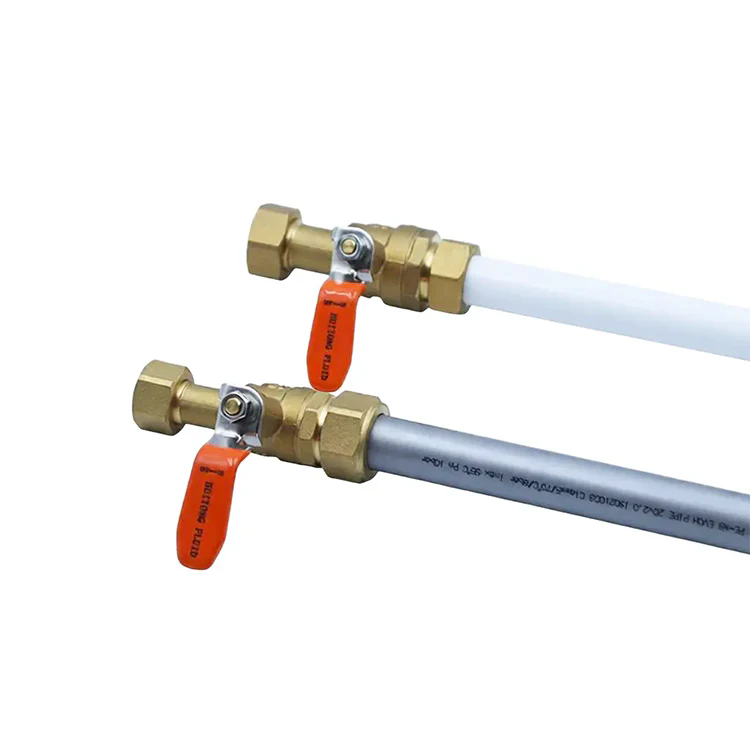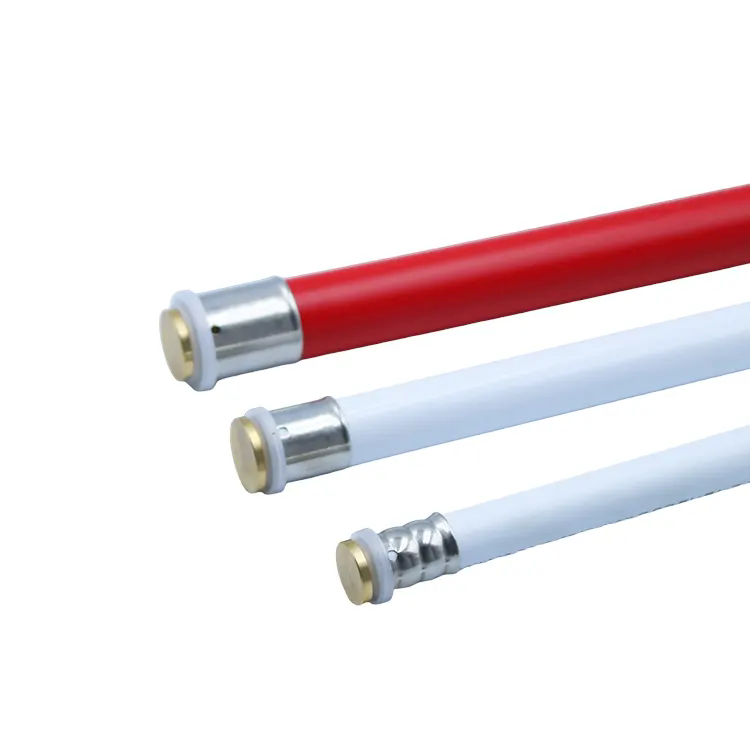


In modern HVAC and hydronic piping systems, unstable water pressure can affect circulation, equipment protection, thermal balance, and long-term maintenance. As a professional manufacturer and supplier, Huitong provides a Fluid Pipeline Pressure Regulating Valve designed to automatically stabilize downstream pressure through a self-acting mechanical structure, without external power or air supply. Its forged HPb59 brass body, nickel-plated finish, EPDM sealing system, and adjustable pressure design make it suitable for residential and commercial HVAC applications.
A pressure-regulating valve is an important component for controlling pressure fluctuations in closed-loop fluid systems. Huitong's solution combines passive self-actuated regulation with corrosion-resistant forged brass construction, heat-resistant sealing, and a compact installation design. The valve responds to changes in pipeline pressure by adjusting the valve core opening, helping maintain stable downstream conditions. This makes it suitable for underfloor heating, central air conditioning, commercial HVAC circulation, and retrofit projects where reliable pressure management is required.
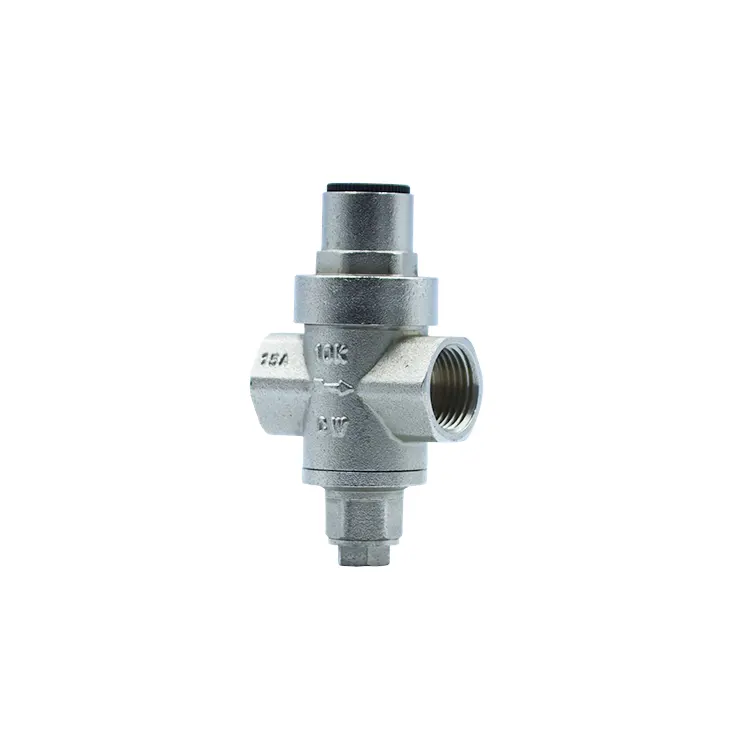
Table of Contents
- What Is a Fluid Pipeline Pressure Regulating Valve?
- How Does a Pressure Regulating Valve Work?
- What Are the Key Features to Evaluate?
- Pressure Regulation Features at a Glance
- Where Is This Valve Commonly Used?
- How Should You Select the Right Valve?
- What System Benefits Can It Provide?
- How Does Quality Control Affect Valve Reliability?
- Frequently Asked Questions
- Conclusion
What Is a Fluid Pipeline Pressure Regulating Valve?
A Fluid Pipeline Pressure Regulating Valve is designed to control and stabilize fluid pressure within a piping network. Instead of allowing pressure variations to pass directly to downstream equipment, the valve adjusts its internal opening according to changes in the medium pressure.
In HVAC applications, this function is particularly useful because pumps, manifolds, heating circuits, cooling circuits, and branch pipelines may experience changing flow demands. Excessive or unstable pressure can contribute to uneven circulation, component stress, noise, or inconsistent thermal distribution.
Huitong's design uses a one-piece forged HPb59 brass body with a nickel-plated surface. According to the manufacturer's product information, the valve uses its own pipeline medium as the operating force, eliminating the need for wiring, external pneumatic equipment, or an additional power supply.
How Does a Pressure Regulating Valve Work?
The operating principle is based on passive mechanical pressure regulation. When pipeline pressure changes, the internal regulating mechanism responds by changing the valve core opening. This modifies the flow passage and helps stabilize the pressure delivered downstream.
This self-actuated approach is useful in systems where continuous electrical control is unnecessary or undesirable. It also reduces dependence on manual intervention because the valve can react to pressure changes automatically.
Three Key Operating Functions
- Pressure sensing: The mechanism responds to pressure conditions within the pipeline.
- Automatic adjustment: The valve core changes its opening to counter pressure variations.
- Downstream stabilization: The controlled flow helps maintain more consistent operating conditions.
For hydronic HVAC systems, stable pressure can also contribute to more balanced circulation between different branches, helping reduce temperature differences caused by uneven flow distribution.
What Are the Key Features to Evaluate?
Forged HPb59 Brass Valve Body
The valve body is manufactured from thickened, one-piece forged HPb59 brass. Forging provides a dense and uniform body structure suitable for applications involving repeated pressure fluctuations. The brass construction is also appropriate for many water-based HVAC and hydronic applications.
Nickel-Plated Surface
A nickel-plated finish provides an additional protective layer against corrosion, oxidation, and scale adhesion. This is especially relevant to HVAC installations that operate continuously through seasonal heating and cooling cycles.
Passive Self-Actuated Regulation
The mechanical regulating structure operates without an external electrical or pneumatic power source. It uses the pressure of the pipeline medium to drive the regulating action, simplifying system integration and reducing the number of external control components required.
Temperature-Resistant Sealing
The design incorporates dual-layer EPDM sealing together with high-temperature-resistant packing around the valve stem. These sealing elements are intended to reduce leakage risks during repeated pressure and temperature changes.
Compact Installation Design
A streamlined valve body can be advantageous when installation space is limited. Applications may include underfloor heating cabinets, ceiling pipe shafts, equipment areas, and other confined HVAC piping locations.
Pressure Regulation Features at a Glance
| Feature | Design Approach | Practical Value |
|---|---|---|
| Valve body | One-piece forged HPb59 brass | High structural strength for HVAC piping |
| Surface protection | Nickel plating | Helps resist corrosion, oxidation, and scale buildup |
| Pressure control | Self-actuated mechanical regulation | Automatic response without external power |
| Sealing | Dual-layer EPDM plus stem packing | Supports long-term leak prevention |
| Adjustment | Manual adjustment handwheel | Allows pressure settings to be fine-tuned |
| Installation | Compact body with standard threading | Suitable for new installations and retrofit work |
Where Is This Valve Commonly Used?
Residential Underfloor Heating
Underfloor heating systems depend on balanced water circulation across multiple circuits. Pressure stabilization can help maintain more consistent flow and reduce the impact of pressure variations between branches.
Central Air Conditioning
Central HVAC systems may experience changing flow requirements as different zones operate. A pressure-regulating component can help maintain more stable hydraulic conditions during these changes.
Commercial Buildings
Shopping malls, office buildings, and other large facilities often contain extensive heating and cooling networks. Pressure control becomes increasingly important as pipe lengths, branches, and operating zones increase.
HVAC Retrofit Projects
Older systems can develop unstable pressure conditions or contain outdated control components. A compact pressure-regulating valve can be incorporated into suitable retrofit projects to improve hydraulic control without redesigning the entire network.
How Should You Select the Right Valve?
Choosing a pressure-regulating valve should begin with the actual requirements of the piping system rather than simply selecting a valve based on nominal pipe size. Engineers, installers, and purchasing teams should consider several factors.
- Medium: Confirm that the valve materials and seals are compatible with the circulating fluid.
- Operating pressure: Identify normal pressure as well as potential pressure fluctuations.
- Temperature: Check the expected heating and cooling temperature range.
- Connection specification: Match the valve threading with the existing pipe or manifold connection.
- Installation space: Confirm sufficient clearance for installation, adjustment, and future maintenance.
- Adjustment requirements: Determine whether the application requires manual pressure setting or automatic regulation.
- Replacement support: Consider spare parts availability and technical assistance over the expected service life.
For project procurement, it is also useful to request material information, inspection documentation, applicable pressure data, connection specifications, and installation guidance before placing a bulk order.
What System Benefits Can It Provide?
1. Better Protection for HVAC Components
Pressure surges can place additional stress on pumps, manifolds, fittings, and other hydraulic components. Stabilizing pressure can help reduce unnecessary mechanical loading and support more predictable system operation.
2. More Consistent Fluid Distribution
Pressure differences between branches can influence flow distribution. Automatic regulation can help create more stable hydraulic conditions, which is valuable for systems requiring balanced heating or cooling.
3. Reduced Manual Intervention
A self-actuated design can respond to pressure changes without requiring continuous manual adjustment. This can simplify operation in systems where unattended or low-maintenance performance is preferred.
4. Potential Energy-Saving Opportunities
More stable circulation may reduce unnecessary pump loading caused by pressure fluctuations. Actual energy savings depend on the complete system design, pump control strategy, operating conditions, and hydraulic balance, but effective pressure management can support overall HVAC efficiency.
How Does Quality Control Affect Valve Reliability?
Pressure-regulating valves operate under continuous mechanical and hydraulic stress, so component quality and inspection procedures are important considerations for project buyers.
According to Huitong's published product information, key components such as the valve core, pressure-regulating spring, sealing packing, and anti-detachment stem undergo durability testing that includes temperature cycling, high-pressure holding, and 10,000-cycle fatigue testing. Finished valves are also described as receiving 100% inspection for water-tightness, regulation performance, and thread compatibility.
Huitong also states that valve bodies receive unique batch identification for production traceability, with material composition reports and factory inspection certificates available for project documentation.
For international procurement, these quality-control details can be useful when comparing suppliers because they provide practical evidence of how the manufacturer approaches material verification, finished-product inspection, and traceability.
Frequently Asked Questions
What is the main purpose of a pressure regulating valve?
Its primary purpose is to control and stabilize fluid pressure within a piping system. In HVAC applications, it can help reduce the impact of pressure fluctuations and support more balanced circulation.
Does a self-actuated pressure regulating valve need electricity?
No. Huitong's design uses a passive mechanical regulating mechanism driven by the pressure of the pipeline medium, so it does not require an external electrical or pneumatic power source for its regulating action.
Can this type of valve be used in underfloor heating systems?
Yes. The product is designed for HVAC piping applications and is specifically described by Huitong as suitable for residential underfloor heating and central air-conditioning circulation systems.
What materials are used in the valve?
The valve body uses forged HPb59 brass with a nickel-plated surface. The pressure-regulating spring is stainless steel, while the sealing system includes heat-resistant EPDM components and stem packing.
Can the pressure setting be adjusted manually?
Yes. A manual adjustment handwheel is provided to allow users to fine-tune the pressure setting according to the requirements of the specific piping system.
Are spare parts available?
Huitong states that replaceable components such as valve cores, sealing packing, and pressure adjustment handwheels are available, allowing maintenance without necessarily replacing the complete valve.
Conclusion
A well-designed pressure regulating valve can play an important role in maintaining stable hydraulic conditions, protecting HVAC components, balancing fluid circulation, and reducing the need for frequent manual intervention. With forged HPb59 brass construction, nickel-plated protection, passive self-actuated regulation, temperature-resistant sealing, adjustable pressure control, and documented inspection procedures, Huitong's solution is designed for residential, commercial, and HVAC retrofit applications.
If you are sourcing a reliable pressure control solution for an HVAC project, retrofit system, or fluid piping application, learn more about Huitong's Fluid Pipeline Pressure Regulating Valve and review the available product and technical information. For specifications, bulk purchasing, OEM requirements, or project-specific recommendations, contact us today to discuss your application with the Huitong team.