Article Summary: A boiler brass ball valve is a small but critical component in hot-water heating systems. It controls, isolates, and shuts off water flow while dealing with temperature changes, pressure fluctuations, repeated operation, and limited installation space. Choosing the wrong valve can result in leakage, difficult maintenance, premature sealing failure, or unnecessary system downtime. This guide explains how a Boiler Brass Ball Valve works, what construction features matter, how to select the right valve, how to install and maintain it, and why material and sealing performance are especially important in boiler applications. It also explains how Huitong approaches valve design and quality control for demanding heating and plumbing applications.
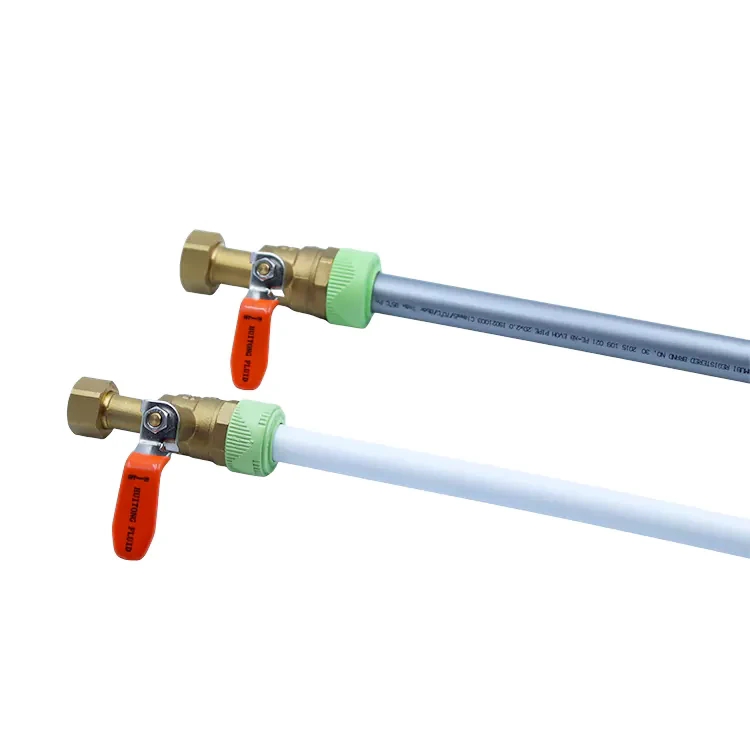
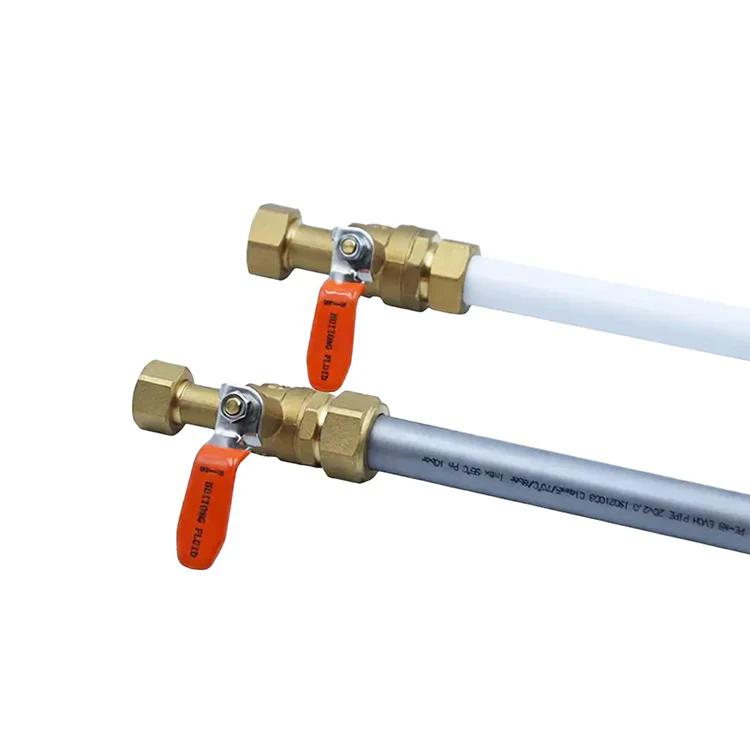
A Boiler Brass Ball Valve is a quarter-turn shut-off valve designed for controlling water flow in boiler-related piping systems. Unlike a conventional faucet-style valve, a ball valve uses a spherical internal element with a precisely positioned passage. When the handle turns the ball so that the passage aligns with the pipeline, water can flow through the valve. When the ball rotates 90 degrees, the solid portion blocks the passage and stops the flow.
This simple operating principle makes the valve particularly useful where fast isolation is required. In a boiler system, technicians may need to isolate a water inlet, heating circuit, service line, heat exchanger, or other section of piping before maintenance. A quarter-turn mechanism allows the operator to perform this action quickly without repeatedly turning a handwheel.
However, a boiler environment is more demanding than a typical cold-water application. The valve may experience elevated water temperatures, pressure fluctuations, thermal cycling, vibration, and repeated opening and closing. For this reason, a suitable Boiler Brass Ball Valve must be selected according to the actual operating conditions rather than simply by pipe diameter.
The working mechanism is based on a rotating ball positioned inside the valve body. The ball contains a central bore that forms the flow passage when the valve is open. A stem connects the ball to the external handle.
When the handle is rotated into the open position, the ball's bore aligns with the pipeline. Water can then pass through the valve with relatively low resistance. When the handle is rotated approximately 90 degrees, the bore moves perpendicular to the pipeline and the ball blocks the flow path.
The sealing system normally consists of seats around the ball and a separate stem sealing arrangement. These components are essential because the metal body alone does not provide the complete shut-off function.
The advantage of this structure is operational simplicity. The operator can identify the valve position visually from the handle direction and isolate a section of piping quickly when required.
A valve may represent only a small part of a heating system, but its failure can create a disproportionately large maintenance problem. A leaking isolation valve may require system shutdown, water drainage, component replacement, or emergency repair.
In boiler applications, reliable isolation is especially valuable because maintenance personnel often need to work around hot water and pressurized piping. A dependable valve allows a specific section of the system to be isolated without unnecessarily draining the entire installation.
A properly selected Boiler Brass Ball Valve can help address several common customer concerns:
Not every brass ball valve should automatically be considered suitable for boiler service. The internal construction, sealing materials, connection design, wall thickness, manufacturing process, and operating specifications all influence performance.
A valve intended for heating applications should be designed around the conditions it will encounter. Hot water can accelerate material aging and place additional demands on sealing components. Pressure fluctuations can also create mechanical stress, especially during system start-up and shutdown.
Important design considerations include:
| Feature | Why It Matters | Potential Customer Benefit |
|---|---|---|
| Forged or robust brass body | Provides structural strength and pressure resistance | Improved durability during long-term service |
| High-temperature sealing components | Maintains sealing performance as temperature changes | Lower risk of leakage |
| Wear-resistant ball | Reduces damage caused by repeated operation | Smoother long-term shut-off performance |
| Reliable stem sealing | Controls leakage around the operating shaft | Cleaner and safer equipment operation |
| Compact configuration | Fits restricted equipment spaces | Easier installation and servicing |
| Suitable threaded connections | Provides compatibility with matching pipework | Reduced installation complexity |
Brass is widely used for plumbing and heating valves because it combines mechanical strength, machinability, corrosion resistance, and practical cost characteristics. These properties make it suitable for many water-control applications.
For boiler service, however, the selection of brass should be considered together with the valve's design and manufacturing process. A valve body must maintain its structural integrity while exposed to pressure and temperature changes. Poorly controlled material quality or inappropriate geometry can reduce reliability.
Huitong's Boiler Brass Ball Valve is designed around a robust brass valve body intended for hot-water circulation environments. The body structure, internal components, and sealing arrangement are considered as a complete valve system rather than as isolated parts.
For buyers, this approach is important because the cheapest valve is not necessarily the most economical choice. A low initial purchase price can become expensive if premature leakage causes repeated replacement, labor costs, water loss, or equipment downtime.
Sealing performance is one of the most important factors when evaluating a Boiler Brass Ball Valve. A valve can have a strong body and good threads but still perform poorly if its sealing elements are unsuitable for the operating temperature or pressure.
The ball seats create the primary seal around the rotating ball. During operation, these components must maintain adequate contact without generating excessive operating torque. If the seat material becomes too hard, softens excessively, shrinks, or loses its dimensional stability, leakage can develop.
The stem area requires separate attention. Every time the valve is operated, the stem rotates through its sealing components. Repeated thermal expansion and contraction can increase the demands placed on this area.
For this reason, a purpose-designed boiler valve may use heat-resistant modified PTFE or another application-appropriate sealing material. The exact material should always be selected according to the manufacturer's specified temperature, pressure, media, and service conditions.
Good sealing performance depends on the complete assembly:
Boiler Brass Ball Valves can be applied to a range of hot-water control and isolation points. Their exact suitability depends on the valve specification and the requirements of the installation.
Before installation, users should verify that the valve's pressure, temperature, connection, media, and regulatory requirements match the system.
Selecting a valve only by nominal pipe size is one of the most common purchasing mistakes. The correct selection requires a broader evaluation of the application.
Check whether the system requires male threads, female threads, union connections, compression connections, or another configuration.
Identify the normal operating temperature as well as possible temperature peaks. The sealing materials must be suitable for the actual service range.
Consider normal working pressure as well as transient pressure changes during pump operation, start-up, shutdown, and water hammer events.
Wall-mounted boilers and equipment compartments often provide limited clearance. A compact valve can simplify both installation and maintenance.
A valve that is rarely operated has different demands from one used frequently for maintenance or flow control.
For potable water or other regulated applications, buyers should confirm applicable material and compliance requirements before ordering.
For commercial projects and large-volume purchasing, production records, inspection procedures, and applicable certifications can help establish consistent quality.
| Selection Factor | Questions to Ask |
|---|---|
| Size | What is the nominal pipe diameter? |
| Connection | Which thread or connection configuration is required? |
| Temperature | What are the normal and maximum operating temperatures? |
| Pressure | What working and transient pressures can occur? |
| Media | Is the valve handling clean water, heating water, or another medium? |
| Space | Is the installation area restricted? |
| Operation | How frequently will the valve be opened and closed? |
| Compliance | Are specific material certifications or market requirements applicable? |
Even a well-manufactured valve can experience problems if it is installed incorrectly. Installation should be performed by appropriately qualified personnel according to the valve manufacturer's instructions and the requirements of the heating system.
Before installation, inspect the valve and pipework for contamination, damaged threads, metal debris, or other foreign material. Contaminants can interfere with sealing surfaces or make the valve difficult to operate.
The pipe should be properly aligned before tightening the threaded connection. Excessive mechanical force can place unnecessary stress on the valve body. Thread sealant should also be selected and applied appropriately for the connection type and application.
After installation, the system should be tested under controlled conditions. Check the body, threaded connections, and stem area for signs of leakage. The handle should move smoothly without abnormal resistance.
Ball valves are generally low-maintenance components, but periodic inspection is still valuable in heating systems. Maintenance requirements depend on the installation, operating conditions, water quality, and frequency of operation.
During routine inspection, look for visible leakage, corrosion, damaged handles, abnormal operating torque, and signs of stress around threaded connections. If a valve remains in one position for a very long period, controlled operation during an appropriate maintenance interval can help verify that the mechanism remains functional.
Do not force a valve that has become difficult to operate. Excessive force may damage the stem, handle, ball, or internal sealing components. Instead, investigate the underlying cause and follow the manufacturer's maintenance recommendations.
For systems exposed to aggressive water chemistry, deposits, or significant thermal cycling, inspection may need to be more frequent.
Understanding common failure symptoms can help maintenance teams identify problems before they become major system issues.
| Problem | Possible Cause | Recommended Approach |
|---|---|---|
| Leakage around the stem | Worn or damaged stem sealing components | Inspect the stem seal and follow approved service procedures |
| Leakage when closed | Damaged seat, ball surface, contamination, or wear | Inspect internal sealing surfaces and determine whether replacement is required |
| Handle is difficult to turn | Deposits, excessive pressure, component wear, or mechanical damage | Identify the cause rather than applying excessive force |
| Connection leakage | Improper installation, damaged thread, or unsuitable sealing method | Inspect alignment, thread condition, and installation torque |
| Corrosion or surface deterioration | Unsuitable environmental or water conditions | Evaluate material compatibility and operating environment |
Huitong focuses on valves and fluid-control components for plumbing, HVAC, heating, and related applications. Its Boiler Brass Ball Valve is developed for hot-water boiler environments where temperature variation, pressure fluctuations, compact installation requirements, and reliable sealing all need to be considered together.
The design approach emphasizes a robust brass body, application-appropriate sealing components, wear-resistant internal parts, and a compact configuration suitable for boiler installations. Depending on the product configuration, threaded connections can facilitate integration with commonly used boiler and piping systems.
For buyers handling wholesale procurement, equipment manufacturing, distribution, or project supply, consistency between batches is also important. Quality control should not stop at visual inspection. Material verification, dimensional inspection, pressure testing, sealing checks, and traceability can provide a more complete picture of manufacturing reliability.
Huitong incorporates inspection and testing procedures into its production process, including checks intended to verify sealing and pressure performance. For projects with specific technical requirements, buyers should communicate the required size, connection, operating temperature, pressure, application, quantity, and certification requirements before placing an order.
This information allows the manufacturer to determine whether a standard configuration is appropriate or whether a customized valve solution should be considered.
Yes, a properly specified Boiler Brass Ball Valve is designed for hot-water control and isolation applications. However, users should always confirm the valve's maximum operating temperature, pressure rating, sealing material, and intended media before installation.
The main advantage is fast quarter-turn operation. A ball valve can quickly move between open and closed positions, making it useful for equipment isolation, maintenance, and service operations.
Brass offers a useful combination of mechanical strength, machinability, corrosion resistance, and durability for many water-control applications. The specific brass grade and construction should still be selected according to the operating environment.
Not necessarily. A standard valve may have different temperature, pressure, sealing, or durability specifications. The valve should be selected according to the actual boiler operating conditions rather than assuming that all brass ball valves are interchangeable.
Service life depends on temperature, pressure, water quality, operating frequency, installation quality, and maintenance. A valve operating within its specified conditions and installed correctly can provide long-term service, but no fixed service life should be assumed without considering the actual application.
Common causes include damaged sealing components, contamination, worn ball or seat surfaces, excessive thermal cycling, improper installation, damaged threads, or operation outside the valve's specified conditions.
A compact design can be advantageous where installation space is limited. Wall-mounted boilers often have restricted clearance around pipe connections, so valve dimensions and handle accessibility should be considered during system design.
Useful information includes valve size, connection type, operating temperature, working pressure, medium, installation environment, required quantity, applicable certifications, and any special dimensional or packaging requirements.
Huitong supplies Boiler Brass Ball Valves for wholesale and project-related applications. Customers should provide their technical specifications and purchasing requirements so the appropriate product configuration can be evaluated.
A Boiler Brass Ball Valve may look simple from the outside, but its reliability depends on several engineering factors working together. The valve body must provide adequate structural strength, the ball and seats must maintain effective sealing, the stem assembly must resist leakage, and the overall design must tolerate the temperature and pressure conditions found in the heating system.
For buyers, the most important lesson is to avoid selecting a valve based solely on size or price. Temperature, pressure, connection type, material, sealing performance, installation space, operating frequency, and quality requirements should all be evaluated before purchase.
When these factors are properly matched, a high-quality Boiler Brass Ball Valve can provide dependable isolation, easier maintenance, and stable service in residential, commercial, and small industrial heating applications.
Huitong is committed to supplying practical fluid-control solutions for demanding plumbing and heating applications. If you are sourcing Boiler Brass Ball Valves for wholesale distribution, boiler manufacturing, HVAC projects, or customized fluid-control systems, contact us with your required specifications and application details to discuss a suitable solution.
Keywords: Boiler Brass Ball Valve, brass boiler valve, boiler ball valve, brass ball valve for heating system, hot water ball valve, boiler water shut-off valve, brass heating valve, boiler valve manufacturer, Huitong Boiler Brass Ball Valve